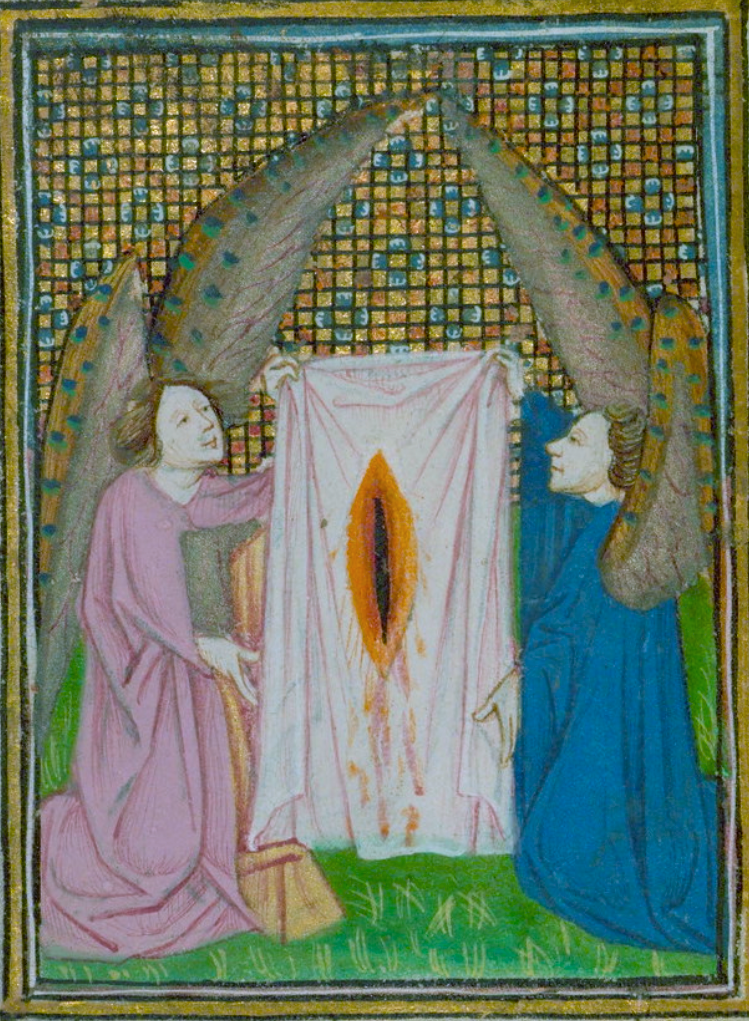
The vulva-shaped wound of Christ
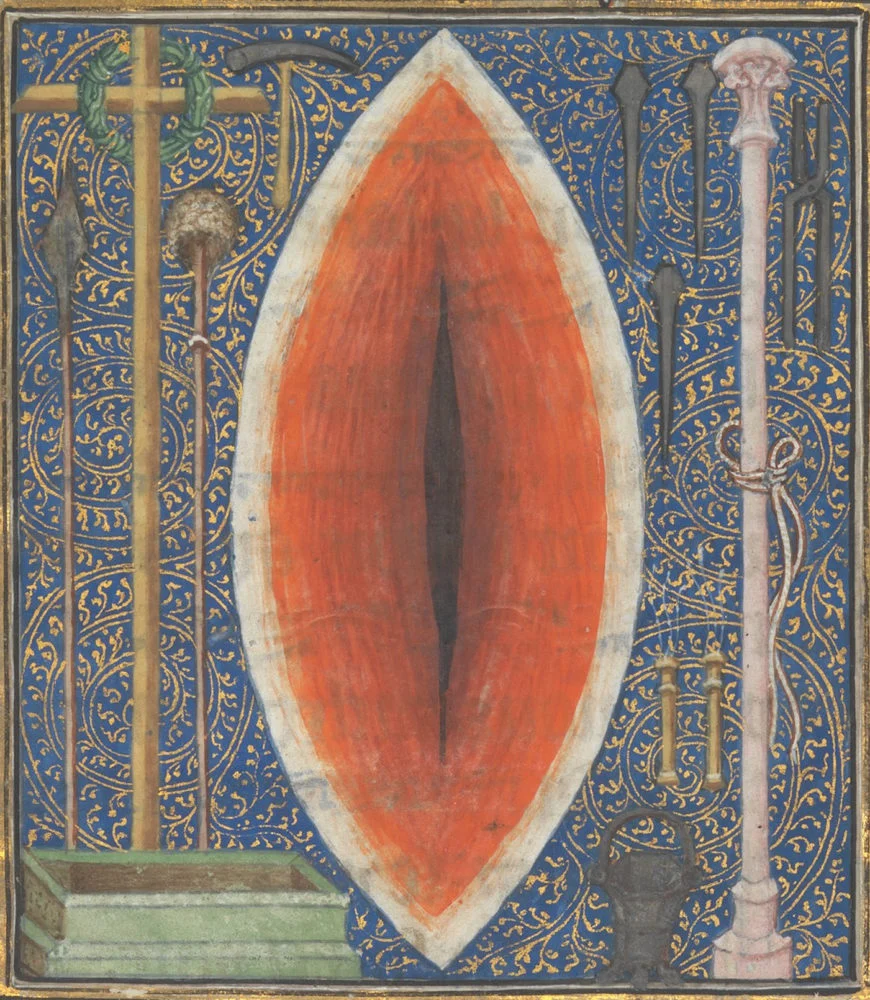
Katie White of Artnet on “The Surprisingly Sexual Side of Medieval Christian Art”:
With its countless crucifixion scenes and gold-leaf Madonna and Child icons, sexuality and unbridled desire might not be the first things that pop to mind when discussing Christian Medieval art. But when paging through an illuminated Book of Hours, it is not wholly uncommon to come across a depiction of Christ’s side wound looking altogether like a vulva.
That’s right: medieval artists often depicted Christ’s wound, inflicted by the spear of a Roman soldier during his crucifixion, as mirroring female genitalia. And it was entirely intentional.
“Medieval viewers understood Christ’s body as both male and female,” said Melanie Holcomb and Nancy Thebaut, the curators behind “Spectrum of Desire: Love, Sex, and Gender in the Middle Ages,” a delightfully corporeal medieval art exhibition now on view at the Met Cloisters in New York. “In addition to being the son of God, he was also frequently described as a mother, and his wound was often likened to a lactating breast that could be a source of spiritual nourishment for others.”